The history of the NSGH in words and pictures
“They say history repeats itself. Whether that is desirable is one thing, but it remains to be seen whether it is actually the case. Perhaps we can learn from history by gaining an understanding of the context in which events take place – the where and how – but above all, the why.”
These were the opening words of the foreword to Leo van Bergen’s publication Global Health in an Age of Nationalism. The Dutch Society for Tropical Medicine and International Health 2007–2017. This essay complemented his earlier historical account of 100 years of the NVTG, which describes the Association’s development from its foundation in 1907 – with all the ups and downs that entailed.
The history of the NSGH (formerly the NVTG) illustrates how the field has repeatedly had to adapt to changing global dynamics, scientific insights and societal debates.
Three periods
The centenary edition distinguishes between three periods, each with its own context and dynamics:
I. ‘Huize Indië’ (1907–1940)
The Association’s early years were shaped by the colonial context. International healthcare consisted mainly of combating tropical diseases in the Dutch East Indies. Issues such as the training of indigenous doctors, the scientific approach to medical care, hygiene, infectious diseases and the tension between nationalism and internationalism dominated the debate.
II. ‘Displaced’ (1940–1960)
The Second World War and the subsequent decolonisation brought about a fundamental break. The link with the Dutch East Indies was severed and the field had to redefine itself. This period marked a first step away from Western notions of superiority and a reorientation towards cross-border cooperation. The outlines of a new policy and a new professional ethos began to emerge.
III. ‘Hotel De Wereld’ (1960–2007)
During this period, there was a growing focus on medical development aid and international healthcare. At the same time, fundamental debates arose concerning the nature of aid, neo-colonialism, Primary Health Care (Alma-Ata, 1978) and the right to health. The association underwent structural changes, the training programme evolved, and new global crises – such as HIV/AIDS and post-Cold War conflicts – influenced the field.
Cuts to formal programmes and the dismantling of traditional medical development cooperation were accompanied by new international initiatives, such as the Millennium Development Goals spearheaded by Kofi Annan. Since then, there has been a renewed and broader commitment to global public health. This shift is reflected in the Association’s membership, its academic embeddedness and its activities. There was a growing interest among students, young international researchers joined the Association, and new partnerships were forged between practice, research and policy.
Global health: a shared responsibility
In his essay on the period 2007–2017, Van Bergen argues that the world has become smaller, but not fairer. Global health – a globally shared responsibility for everyone’s health – takes centre stage in the pursuit of justice between countries and people.
The writing of history holds up a mirror to us: many themes recur time and again, whilst the Association must continually adapt to national and international developments.
What’s in a name?
The Association’s name reflects this development.
- First name change: at a time when traditional models of medical development cooperation were being reviewed, ‘International Healthcare’ was added to the name. The term ‘tropical medicine’ remained in use, as did the abbreviation NVTG.
- Second name change (2025): the transition to Netherlands Society for Global Health (NSGH) marks the next step. This change is in line with global trends, the recognition of the programme and the aim of creating an inclusive association with a broader scope of activity.
Logo: from a palm tree to a globe to a circle
It wasn’t just the name that changed; the logo evolved too.
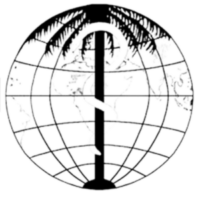
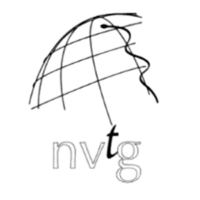
- The palm tree referred to the colonial origins of the field.
- The globe, which has long been a central feature of the logo, symbolises a hundred years of history and global engagement.
- The disappearance of the palm tree and of a globe showing only the southern hemisphere underlines the shift towards equal North-South cooperation.
- The disappearance of the Aesculapius symbolises the broadening of the professional field: alongside doctors, other disciplines also contribute to equitable access to healthcare worldwide.
Publications and further reading
- 📘 Leo van Bergen
- 📗 *The Moses of Malaria: Nicolaas H. Swellengrebel (1885–1970) Abroad and at Home
On his work in tropical medicine and parasitology, and his involvement in eugenics in the Netherlands and the Dutch East Indies. - 📄 Article in the latest edition of Global Health Perspectives:
From *Medicus Tropicus* to *Global Health Perspectives*: A Bird’s-Eye View of Sixty-Two Years
 Dutch
 English