A B C D E F G H I J K L M N O P Q R S T U V W X Y Z
A
Afghanistan
Ahad Quraishi is a Dutch GP from Afghanistan, who chairs the foundation: “everybody deserves a chance”. There are 280 Afghan doctors in Holland. His network is huge. info@kans4you.eu
Antillen
BONAIRE
De zorg wordt daar tegenwoordig geregeld door: https://www.pccarib.com/
Situatie: Op Bonaire zijn zeven praktijken, vijf met Huisartsen opgeleid in Zuid-Amerika en twee met Nederlandse Huisartsen duo’s die in dienst zijn. Het werk is heel erg vergelijkbaar met Nederland: zelfs het HIS komt uit Nederland, alleen de patiënten, de context en manier van werken zijn anders. Zo is er bijvoorbeeld nog veel papieren post, gebeurt er weinig telefonische triage en moeten mensen met hun recept bij de apotheek in de rij gaan staan. Het ziekenhuis functioneert heel Nederlands maar ook daar gelden digitalisatie issues en niet alle specialisten zijn altijd aanwezig. Soms worden patiënten uitgevlogen naar Colombia, Aruba of Curaçao. Veel voorkomende problematiek op het eiland is hypertensie, diabetes, obesitas en complicaties daarvan natuurlijk maar ook (huiselijk)geweld en verkeersongevallen zijn veel voorkomend.
Waarneming: er is op Bonaire veel behoefte aan waarnemers (liefst minimaal 6 maanden maar als je goed in je talen zit dan kan korter ook). Verschillende praktijken zoeken vaste waarnemers en daarnaast zijn er het komende jaar huisartsen die met pensioen gaan en nog geen opvolging hebben. De HAP heeft eigenlijk ook altijd diensten ter overname (avond en weekend).
Eisen: BIG registratie, BES ontheffing (als je recent in NL gewerkt hebt geen probleem), beroepsaansprakelijkheidsverzekering voor Bonaire (via VVAA te regelen). Er wordt op Bonaire met name Papiamentu, Spaans en Nederlands gesproken. Als je Papiamentu of Spaans een beetje onder de knie hebt kom je een heel eind. Als je langer dan 3 maanden gaat dan moet je je ook op Bonaire in gaan schrijven, dat kost iets meer papierwerk.
Wonen en sociaal: Bonaire is geen goedkoop eiland maar heeft wel veel te bieden. Het is veilig, klein en je kan er fantastisch windsurfen, duiken, zeilen, snorkelen, fietsen etc. Qua scholen is er een wachtlijst dus mocht je je kinderen naar de ‘nederlandse’ (privé)school willen, dan moet je ze vast zo vroeg mogelijk aanmelden. Voor de kinderen is er een manege BSO, zwemles in de zee, surfles en van alles meer te doen. Financieel is waarnemen op Bonaire niet heel lucratief maar als je HAP diensten doet wel te doen.
Contact: Mocht u interesse hebben dan kan ik u in contact brengen met huisartsen of de huisartsenpost op Bonaire, u kunt mij bereiken via de WHIG.
Mashi Danki en Ayo
CURACAO
Irma Baltes en Maarten Dekker zitten op Curacao in COVID-times.
Een reisje terug in de tijd…De diabetes mellitus tsunami op Curaçao, een werkbezoek.
Joop Raams, huisarts Amersfoort, bestuurslid NVTG
Curaçao, een autonoom land(je) in het Koninkrijk, kampt met een enorme epidemie van Diabetes Mellitus met incidenties van 3-4 X die in Nederland , waarvan een groot deel niet herkend of onder controle. Oorzaken zijn erfelijkheid, armoede, lifestyle factoren, gebrekkige opsporing, capaciteitsproblemen bij de huisartsen en gebrekkige samenwerking met de tweede lijn. Het gevolg is verstopping van de capaciteit van het ziekenhuis door acute complicaties zoals keto acidotisch coma, voetulcera en chronische complicaties als nierdialyses en amputaties. De zorgkosten lopen als gevolg van deze epidemie exponentiëel op. Het ministerie van GMN (Gezondheid, Milieu en Natuur) onderkent dit probleem en wil het aanpakken met implementatie van de ( naar Curaçao vertaalde) zorgstandaard diabetes mellitus middels ketenzorg naar Nederlands model. Om hierbij te adviseren en de partijen te helpen op één lijn te komen, bracht ondergetekende samen met een vertegenwoordiger van INEEN en de NDF op uitnodiging van het ministerie een werkbezoek aan Curaçao en participeerden wij in een werkconferentie voor alle betrokken partijen; overheid, verzekeraar ( SVB) en alle zorgverleners in eerste en tweede lijn. De conclusie van de werkconferentie was dat het probleem beheersbaar wordt als alle partijen hun verantwoordelijkheid nemen en met z’n allen in samenwerking de schouders eronder zetten. Daarvoor is nodig versterking en organisatie van de eerste lijn met de huisarts als spil, goede werkafspraken met het ziekenhuis, substitutie naar de eerste lijn, goede ICT ondersteuning , scholing en nascholing , opleiding van POH’s, kwaliteitsbewaking en landelijke coördinatie alsmede voldoende financiering. Er wordt een ambitieus projectplan opgezet om dit alles te realiseren waarbij de kost voor de baat uit gaat, maar als het lukt, wordt Curaçao een nog gezonder en vitaler stukje koninkrijk onder de zon.
Australia (Looking for work as a GP? )
The Always-wanted- to-know-but-too-afraid-to-ask-easy-to-work-in-Australia-GP guide
Key points
- Have patience! The process of registration is a lengthy one, that can take a year or longer, as all steps are taking serially. There is a lot of dissatisfaction with the current process and recently arrived GP’s including myself have been interviewed about this. Hopefully this will improve in the future.
- It’s definitely worth it if you want to stay for a longer time, life-work balance, climate and your income are generally better here than in the Netherlands.
The Process
1. Find a ‘ locum ‘ agency that helps you to find a suitable place. First, consider where in Australia you want to go, because most agencies are focused on a part of Australia. GP practices should have a certain status (area of need status) before they can adopt a foreign doctor, check this! This usually means outside of the large metropolitan areas of Sydney/Melbourne. Because many practices are in need of GP’s , they’ll pick up the tab for the costs of the ‘ locum ‘ agency. That’s generally around 10,000-15,000 dollar with a placement
2. Job interview, usually by telephone with interested practices. Obviously important as you have to work with each other. But they are also involved in applying for your Visa, basically agreeing to support you and your family if things go pear-shaped. This also means that you cannot just go somewhere else can work if you’re here once because your visa is provided for work in that specific practice until you get permanent residency.
3. Start enrollment procedure with Australian Medical Council (AMC). http://www.amc.org.au/index.php/ass/apo/spp/aonsp
– all documentation have to be translated, certified and can only be sent by post which means several returns to the Australian Consulate in The Hague.
– The website States that all documentation should be sent in duplicate to the AMC and the relevant specialist college, for general practitioners, the Royal Australian College of General Practitioners (RACGP) or the Australian College of Rural and Remote Medicine (ACCRM). My experience with the RACGP is that they only start moving after the ‘all-go’ from the AMC’ and it was pointless to send the data to both.
– Part of a checklist of AMC is a verification of your qualifications through the ECFMG http://www.ecfmg.org/ located in the USA. Very bureaucratic in speed and response, good luck especially if you’ve obtained your medical degree in Leiden.
– The IELTS, a English language test has to be completed successfully with a minimal score of 7 (good user) on all four components. Focus on the essay, the rest is ‘easy’.
4. Enrollment procedure met RACGP
http://www.racgp.org.au/download/Documents/Fellowship/pathway_overview_flowchart.pdf
– Repetition of documentation send to AMC now to the RACGP
– Assessment of GP category, Dutch General practitioners are considered category 2
– Fitness for intended Clinical Practice interview which is a kind of ‘ Skype ‘ interview. This was a lot tougher than I expected, depending on that you’ll get a go/no go, usually a ‘ go ‘, with a certain amount of supervision.
5. Feedback to the AMC, after which the AMC gives you a final ‘ go ‘Enrollment procedure with Australian Health Practitioner Regulation Agency (AHPRA) http://www.ahpra.gov.au/
This is the Aussie BIG-registration, so you get a provider number and a prescriber number, without it you can’t declare to Medicare or write prescriptions.
- Send documentation comparable to that send to AMC and RACGP
- Send request for a 19AB exemption, otherwise you’re not entitled for a provider number, this is subject to change, ask your ‘locum’ agent when you get around to this.
- The application has to be submitted in person at a AHPRA office in Australia, after which it can last another 4-6 weeks before you really can get started. Take this into consideration in your planning.
- You are a specialist practitioner in the Netherlands (vocational registered), but you get a registration as a non-vocational registered GP, until you’ve done the exams of the RACGP (only possible after 6 months working in Australia).
- Request visa. Probably the best option is a 457 long business visa, which allows you and your family to live and work in Australia. After two years you can apply for permanent residency. This will allow your partner to work as well, if he or she chooses to do so
- Visa request was a breeze compared to the medical registration, good service and quick response, all done digitally.
- You need a medical check, I was quite happy with this GP in Amsterdam
http://huisartsamsterdam.praktijkinfo.nl/pagina/60/australia_canada-health-exam/
Concluding remarks
During the application I was 34 and just finished as a GP registrar. Depending on your personal background, some aspects of the registration may be different .
Questions? Feel free to mail to krukerink@hotmail.com
Hartelijk groet, Marco Krukerink
We look for information & contact on FM in Irian Jaya (Papua New Guinea, Asia) as well as Oceania.
B
Botswana
FM-training started in Gabarone in 2010. Main training sites are district hospitals in Mahalapye and Maun. Head of the FM- department is: Vincent Selthare, vincent.setlhare@mopipi.ub.bw. For contact mail: Colin Pfaff colinpfaff@yahoo.co.uk or Dr Luise Parsons luise.parsons1@btinternet.com
Brasil
The university of Maastricht has a link with Brasil.
C
Canada
Calgary University has an active department providing lots of free teachingmaterial for rural FM in LIC. MMedical (zie https://www.mmedical.nl) biedt bemiddeling.
De Nederlandse huisartsopleiding staat goed aangeschreven.
Er zijn verschillende staten die huisartsen zoeken met in Alberta het grootste aanbod.
De voorbereiding kost tijd, tenminste 1 jaar waarna je (betaald) kunt werken onder supervisie.
China
The Zorggroep Almere has a link with the city of Qingdao (3 million people) where over 100 health centres are started with FM as orientation.
The exchange was part of a bigger program of a exchange between CHina and Holland. See the report on the program & project of the Dutch and Chinese government.
Cuba
Paul Jonas is coordinator for Cuba and FP-trainer in the Leiden UMC. He is intrigued by the fact that the life expectancy and child mortality in Cuba equals ours. Read in Dutch the 2020 interview with Annemarie de Jong.
His experieces inspired them to make a training module on prevention & public health for the FP-trainees.
He has built up a network in Cuba Doctors & students can apply for electives there. A Focusgroup Cuba (former-Cuba-elective students) helps students to find an elective. They also give presentations on prevention for interested local groups.
His email is: P.P.M.Jonas@lumc.nl. In Dutch he wrote an article in MC on Cuban Health Care and a manual on prevention for FP-trainees.
See also our paper on lessons for prevention from Cuba in Dutch in our Primary care Journal
Costa Rica
Costa Rica is exemplary for how it organised its heath care.
Community-Oriented Primary Health Care Lessons from Costa Rica | Commonwealth Fund
Kristin Holthuis (FP, Diplomate Comprehensive Energy Psychology, Certified EFT trainer ) has worked for years to support the training of Family practice in San Jose. She now runs a private General Practice in San Jose.
Colombia
Read here: LOVAH bulletin huisartsstage Cali about the experiences of a Dutch student with the FM 360 project in Cali. The text is from the LOVAH bulletin.
D
DRC (Democratic Republic Congo)
Recently Vainqueur Diakengua Nsongisa – a resident of the FM training program in Kinshasa – started a research project on hypertension.
The research is part of an online support program ARC see also the WONCA-website: Afriwon Research Collaboration of WONCA.
It is quite a challenge if this program is living up to its expectations.
email: Vainqueur Diakengua
E
Ecuador
Jaap Bezemer is Arts Internationale Gezondheidszorg en Tropische geneeskunde (AIGT) en werkt in de eerste lijn op de polikliniek en spoed eisende hulp van het Christelijk ziekenhuis ‘Hospital Shell’.
Een groot deel van zijn tijd besteedt hij aan onderzoek van tropische ziekten, met name leishmaniasis. We willen de algemene kennis, diagnose en behandeling daarvan verbeteren.
Daarnaast is hij erg betrokken bij een inheemse evangelische kerk. Samen met zijn vrouw Linda helpen we jungle gemeenschappen van de Zapara, Shuar en Shiwiar stam door kleine apotheken op te zetten en lokale gezondheidswerkers te trainen.
Het ziekenhuis Hospital Vozandes Quito traint huisartsen en biedt goede huisartsgeneeskundige zorg. Meer informatie is te vinden op hun website: https://hospitalvozandes.com/
Contact: j.m.bezemer@gmail.com. Telefoon: 00593994020173
Jacob en Carolien van der Ende, beiden tropenarts hebben in 2017 Quina Care opgericht om hiermee de realisatie van Hospital San Miguel mogelijk te maken.
Hospital San Miguel is een streekziekenhuis in het Amazonegebied waar complete eerstelijnszorg en acute tweedelijnszorg wordt geboden. Een groot deel van de dagelijkse casuïstiek omvat huisartsengeneeskunde, daarom hebben wij hun op de WHIG-website geplaatst.
F
France
Former tropical doctors stray off to other countries to work as GP. So did Jan Auke Dijkstra by moving to France. France offers a great Job opportunity because of a huge shortage of rural GPs. You need to speak French. He works 50/50 in 2 practices, one in a village of 8000, with one other colleague.
He worked 8 years in Curaçao in the eighties in a hospital and as a GP. Then three years in the Republic of Benin and later in Rwanda after the genocide in 1995. Then back to Antwerp for an MPH, applying it in Zimbabwe for a couple of years. Then 3 years 50/50 in Geneva (Travel Medicine) en France (GP) and back for 5 years to Africa, Namibia, for the WHO in HIV-control. In 2011 settled as GP in France near Geneva. His kids are in the international school.
G
GAMBIA
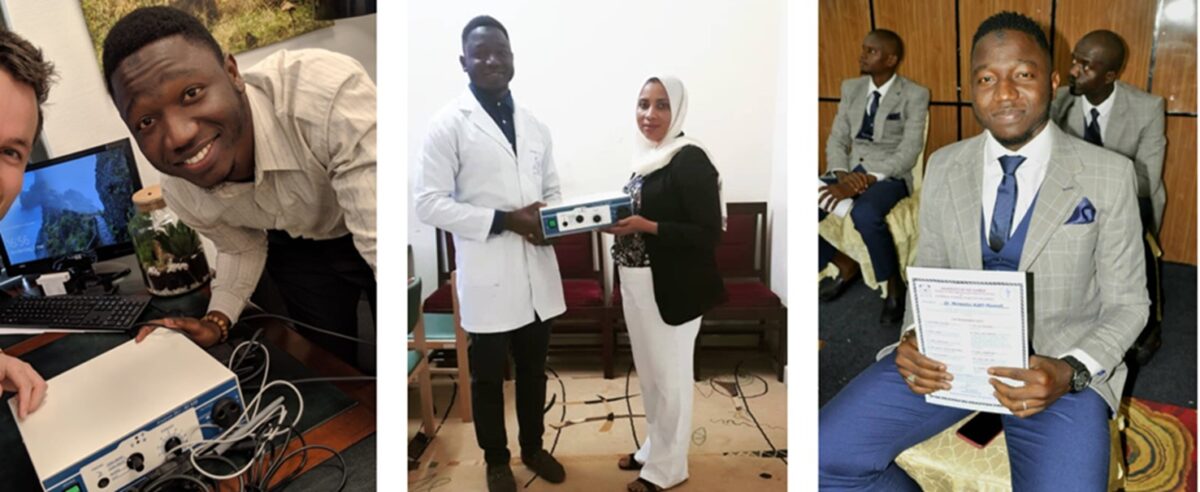
De grote droom van Momodou Kabir Manneh is om een eerstelijnsvoorziening te bouwen op familiegrond in een arm stedelijk gebied in de wijk Sukuta in het westen van Gambia. In Gambia is er veel aandacht voor infectie ziekten zoals malaria, diarree en HIV. Momodou wil in het gezondheidscentrum juist ook mensen met chronische aandoeningen zoals diabetes mellitus, hart- en vaatziekten en COPD behandelen. Deze aandoeningen, die tot voor kort gezien werden als westerse welvaartsziekten, rukken ook in Gambia vooral in de arme wijken op. Voor de mensen die het treft valt er zeer veel gezondheidswinst te boeken als ze tijdig goede voorlichting en behandeling krijgen. En dat is wat Momodou met zijn kliniek wil bereiken
De verwachting is de kosten tussen de 120.000 en 150.000 euro bedragen om het gezondheidscentrum te bouwen, uit te rusten met benodigde apparatuur en om de eerste 5 jaren de salarissen van verpleegkundige/medici te kunnen betalen.
Een gedetailleerde begroting en meer informatie over het project vindt u op www.ghawa.org.
Een Nederlands Stichting met ANBI status opgericht door huisartsen David Schaap en Willem Koch en apotheker Eefje van Rijnsoever werft de benodigde fondsen.
Doneren kan makkelijk via Formulier met iDEAL – Stichting GHAWA
Ghana
Dutch GPs from the University of Amsterdam (UvA) are involved in training nurses in Ghana on different aspects of FM. For contact: See their website.
Gert van den Berg has just left for Ghana. Click here for his Blog
H
I
India
Collaboration of PUM, Medic and WHIG in India
Through PUM Pieter van den Hombergh was connected to Mr. Jain from India to support the start of a health center near Amritsar.
Mr. Jain acts on behalf of The Shri Madan Lal Puran Devi Jain Trust, that hopes to bring affordable health care to those who cannot afford that.
It very much supports the idea of Universal Health coverage for all.
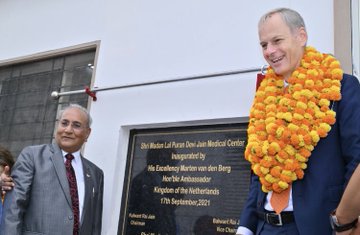
PUM and its Hans Blankert Fund (HBF) enabled Medic to furnish the center with medical equipment. The opening was done by the Dutch ambassador.
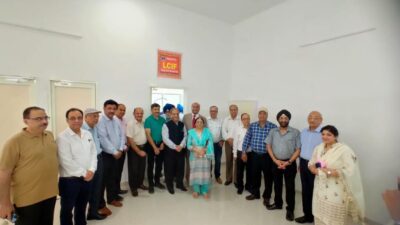
The center is up and running, thanks to the determination of Mr. Jain and his Trust. For the interesting report click here.
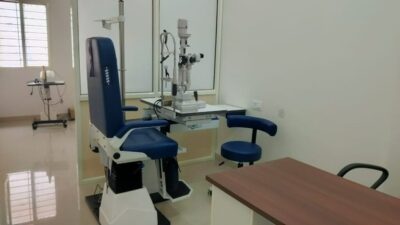
Family Medicine in India. What is going on?
India has discovered FM again after years of neglect. They train 300 FPs now and want a rapid increase. Read their story
Indonesia
Maastricht University is collaborating with the MoH of Indonesia for an exchange in FM-training expertise (2017). Click for info on their course by SHE (School of Health Professions Education)
Iraq
Dara Sinjari is a FP trained in The Netherlands and tryin to set up General Practice care in the Kurdish Region. He wrote: Family Medicine is taking a very important role in the healthcare system of the Kurdish Region of Iraq. It is now recognized and integrated in the primary healthcare. It is necessary to reorganize the primary healthcare because of the increased load on the health system by IDPs and refugees. The family physician tackles a lot of problems. We are in the first phase. Our teams are working very hard to improve family medicine.
For contact you can mail: sinjari@live.nl
J
Japan
In september 2011 professor Ryuki Kassai MD – head of Department of FM – and his wife Masako Li, proef in health economics visited the health center of Lex Goudswaard in Houten. He is trained in Canada and has started the first FM-training in Hokiado. Contact: Department of Community and Family Medicine, Fukushima Medical University, 1 Hikarigaoka, Fukushima, 960-1295 Japan. Tel: +81 24 547 1515 E-mail: ryukikas©fmu.ac.jp or masako©econ.hit-u.ac.jp, Home page: http://www.fmu.ac.jp/home/comfam/
In 2009 Prof. Jacobijn Gussekloo visited Japan because they wanted to hear about our elderly care. Lots to learn from Japan. For more info contact J.Gussekloo@lumc.nl
K
Kenya
In Kenya Family Medicine is an acknowledged specialism now and
5 universities in Kenya offer FM-training (must see YouTube film) :
1. Moi University in Eldoret (see update on FM-training in MU)
In Eldoret the WHIG started its involvement in FM-training in 2004 and Hans & Marianne Bakker continued giving courses. (see news on Eldoret)a. For the history of the FM-training in Moi University: Click
b. For the FM-curriculum in Moi University Click
c. For the FM-trainers in Eldoret Click
d. The HDSS in Eldoret & in Nairobi (S. v/d Vijver & the SCALE UP Study),
2. Aga Kahn University Hospital (AKUH) Nairobi
The FM-training in AKUH Nairobi trains 3 residents per year (a 4 year FP-training). In their 3rd and 4th year, residents train in a rural government hospital (Marangua hospital) 1 hr away from Nairobi and in Mariakani .
The Dutch FP Fleur de Meijer is staff member of the Dep of FM at AKU. In 2017, 2 FP’s from the University of San Francisco (UCSF) have helped 6 weeks in Marangua with the training and participated in teaching at AKUH in Nairobi. AKU is interested in a similar collaboration with the WHIG.
Simone Jaarsma and Pieter van den Hombergh piloted in coaching of the residents who participate in a community oriented Primary Care (COPC) elective. They participated in the Canadian funded ‘Access to Quality Care through Extending and Strengthening Health Systems’ (AQCESS) project, that is implemented in 3 subcounties: Kaloleni/Rabai (Kilifi County) and Boachoge Borabu (Kisii County).
Two residents Florence Mbatia an Nelson Nyamu did an interesting Quality Improvement project on The Burden and Management of URTI in the Primary Care facilities.
It shows the potential contribution of FM towards a more Evidence Based approach. The project resulted in better, more cost-effective care. In a hurry? Read the publication in the African J of Primary Health Care
Interested in volunteering for coaching? Get an impression from the report of Simone & Pieter on their 6 weeks elective guidance.
3. Kabarak University
It is based on Christian values. Infamed provides tuition fees.
4. Kenyatta University (see film) Nairobi
KU projected 80 residents in FM for 2020.
5. Maseno University Kisumu
COMMUNICATION COURSE for Kenyan Registrars
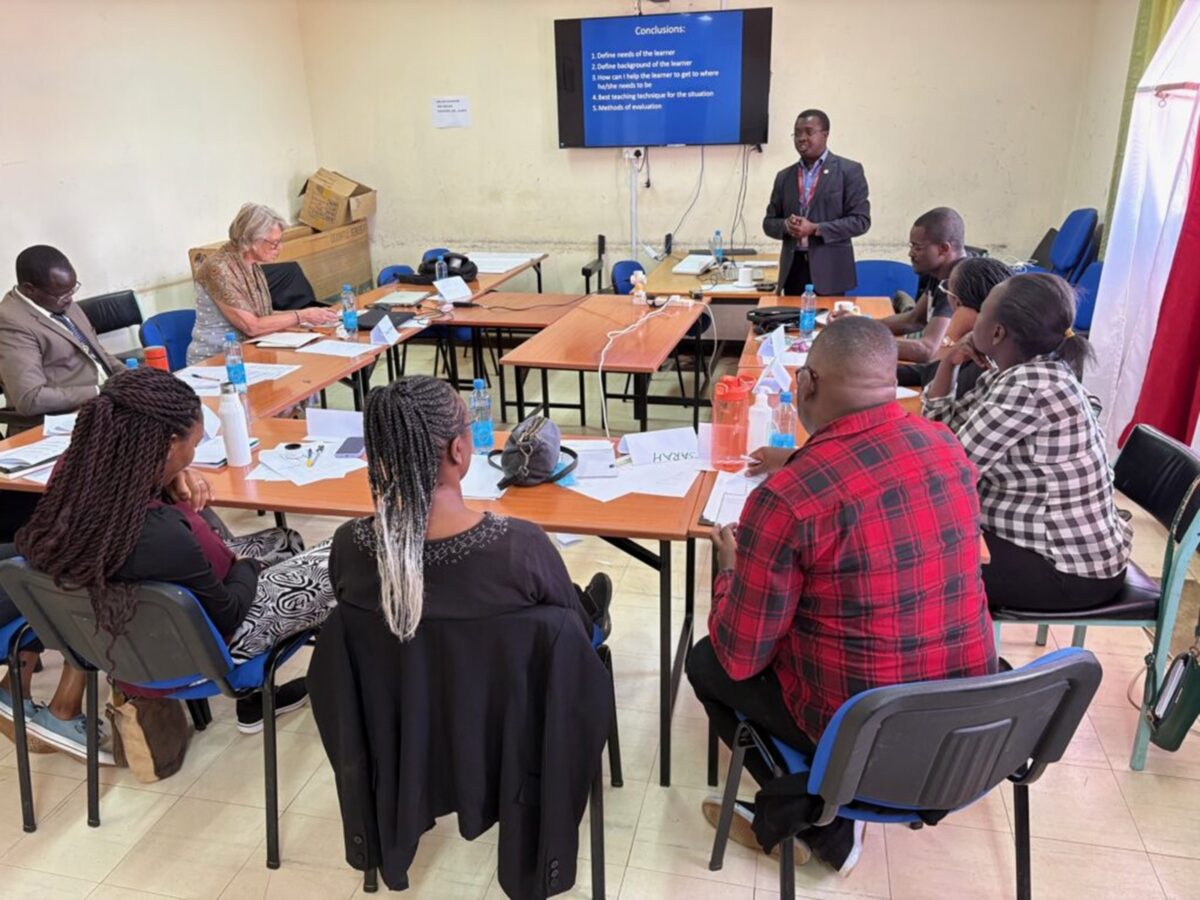
COMMUNICATION COURSE; March 2025 in Eldoret-Moi University-Kenya
Marianne Holtland and Pieter van den Hombergh were invited to organise a 4 day course in March 2025 for FM-trainees in Kenya. Topics were communication skills & management/organisation .
Kabarak University and Maseno University sent both 2 FM-registrars, while 5 came from Moi University.
In total 9 registrars attended. Akiruga – HoD of FM-training in Moi University Eldoret – was our host.
We did mostly co-teaching. Dr. Nthusi – HoD of FM-training in Kabarak University, Dr. Ouma Omondi – HoD of FM training in Maseno University and Dr. Akiruga – all gave lectures together with us and also attended most of the course.
The PM-fund provided the money (2890,-) for travelling, housing as well as for the meals and the conference room. The PM-fund receives WHIG-money from the RATO’s.
The course was a success and the evaluations were unanimously positive.
A brief indication of our program: Introduction, Leary’s Rose, Patient Centered Consultation, Learning and Teaching Styles, Management skills, Breaking Bad News, ‘Meetings, Bloody meetings!’. End-evaluation.
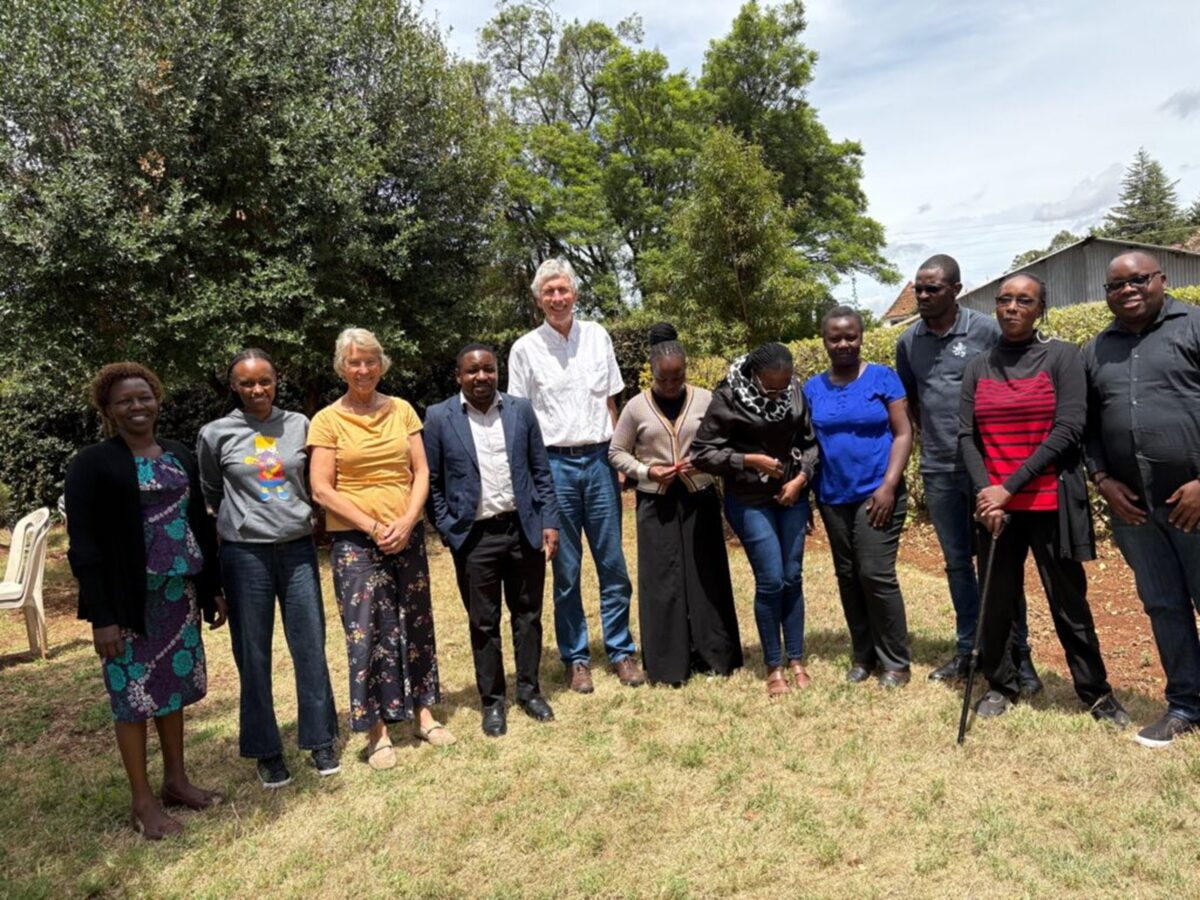
Left to Right: Zappora (secretary), Grace, Marian, Akiruga, Pieter, Mellan, Valentine, Sharon, Rapenda, Sarah, Cynthia, Constan. Victor missing. Below Dr. Nthusi is teaching.
Karen surgery Margriet van Unen FP.
This is Dutch style Family Practice offering FM-care to the community of Karen. It is exemplary for integrated, continuous, personal care. FM-residents are trained in the practice.
L
M
Mongolia
The University of Amsterdam had a link with the FM-training of Ulan Batur.
There is no active connection anymore.
FP Saskia van Vugt visited Mongolia to support the training.
For her vivid report mail saskiavanvugt©hotmail.nl
Mozambique
Ofélia Rambique is a Family Physician in Maputo. She is involved in a research study on:
Knowledge of the disease course and prevention of cervical cancer;
Barriers to Utilization of Cervical Cancer Screening Among Women Who Attend Mother and Child Health Services in Primary Health Care in Mozambique.
Supervision: Yaone Bogatsu & Pieter Van Den Hombergh
Her research is done within the ARC-program her study is ready to start.
Myanmar
Myanmar has a PHC-system, but is aware of its shortcomings. From Jaap Hamel, a public Health consultant we got this newspaper article page 1 and page 2 on FM. It is the beginning.
N
Nepal
THE FOUNDATION WOMEN FOR WOMEN NETHERLANDS ” health project for women in Nepal” This project gives treatment, education and training and collects data for scientific purposes hoping in this way to support the development of health services in Nepal. We were overwhelmed with the great number of needy women who visited our camps and treated 1200 women in 6 days for gynecological affections. In 2003 and 2004 we again organized gynocamps in different areas and concentrate now on problems of uterine prolaps (fallen womb). Read more on http://www.vrouwenvoorvrouwen.nl/. The FP on the program is Molly Verdegaal mollyv@planet.nl. Read her paper in the MT-special.
In Nepal heeft slechts 15% van de bevolking toegang tot de nationale gezondheidszorg. Het ziekenhuis waar Projects Abroad mee samenwerkt rekent ongeveer 1/5 van wat veel ziekenhuizen in Kathmandu rekenen. Hierdoor heeft de arme bevolking ook toegang tot betere gezondheidszorg. Ook is er een speciaal fonds van het ziekenhuis, deels gesponsord door Projects Abroad, waarmee sommige patiënten voor een kleine eigen bijdrage of voor niks behandeld kunnen worden. lees verder op de site van projects abroad: http://www.projects-abroad.nl/vrijwilligersprojecten/projecten-voor-professionals/gezondheidszorg-in-het-buitenland/arts/nepal/
Dit medische project is perfect geschikt voor mensen met ervaring in de gezondheidszorg die als vrijwilliger in het buitenland willen werken, zoals artsen die een sabbatical genomen hebben.
New Zealand
Werken als huisarts in Nieuw-Zeeland
In januari 2023 zijn wij, ons gezin met drie kinderen, naar Nieuw-Zeeland verhuisd, waar ik sindsdien als huisarts werk. Het is een geweldige ervaring samen en een leuke nieuwe uitdaging na bijna 10 jaar werken in Nederland. Ik zou het iedereen, met interesse in een buitenlandervaring, zeker aanraden!
Nieuw-Zeeland is een prachtig land met volop outdoor mogelijkheden en er heerst een hele relaxte sfeer. Er is een groot tekort aan huisartsen, waardoor ze erg blij zijn met buitenlandse huisartsen. Zowel in de rurale gebieden als in de grotere plaatsen/ steden is het mogelijk om als huisarts een baan te vinden. Iedereen is erg dankbaar voor je komst en deze waardering wordt, zeker ook door patiënten, regelmatig uitgesproken. Patiënten en collega’s zijn gewend aan buitenlandse dokters en aan wisselende gezichten.
Over het werk
In tegenstelling tot in Nederland komen nagenoeg alle patiënten naar de praktijk en worden visites niet of nauwelijks uitgevoerd, tenzij de praktijk ook verpleeghuispatiënten heeft die echt niet meer mobiel zijn, wat een zeer ruim begrip is hier.
Bij hoge spoed/ ernstig zieke patiënten, die niet naar de praktijk kunnen komen, wordt vaak direct verwezen naar de spoedeisende hulp of 111 (het spoednummer). Patiënten kunnen zonder verwijzing naar de spoedeisende hulp. Dit is even schakelen als je het Nederlandse zorgsysteem gewend bent.
Een dag wordt ingedeeld in een ochtend en een middagsessie en tijdens deze sessies doe je het spreekuur. Dit zijn blokken van 4 uur, inclusief administratietijd. Het wisselt per praktijk, maar gemiddeld zie je 10 tot 12 patiënten per sessie. Tijdens de administratieblokjes doe je de recepten, post etc. Soms word je door een verpleegkundige gevraagd om mee te kijken bij een patiënt, maar dit gebeurt niet vaak omdat de verpleegkundigen goed geschoold zijn en veel kennis hebben. Sommige praktijken hebben ook een ‘doctor on the day’ die veel administratie op zich neemt en het aanspreekpunt is voor de verpleegkundigen, zodat je verder niet gestoord wordt tijdens het spreekuur. Tussen de sessies wordt een half uur geblokt voor lunch. Dit wordt niet betaald, maar in principe wordt er dan ook echt niet gewerkt, maar lekker geluncht.
Je werkt met verpleegkundigen in plaats van doktersassistenten, wat heel prettig is. Zij hebben hun eigen spreekuur en verlagen daardoor de work-load. Hierdoor zie je minder vaak kleine kwalen en hebben de patiënten die je ziet vaker complexe problematiek. De receptionisten zijn niet medisch geschoold, waardoor er in de meeste praktijk geen of weinig triage is. Patiënten kunnen dus laagdrempelig een afspraak maken en soms weet je vooraf niet waarvoor ze komen. De acute plekken op de dag worden wel getrieerd door de verpleegkundigen, zodat deze plekken opgevuld worden met patiënten die echt die dag gezien moeten worden.
Naast huisarts ben je in Nieuw-Zeeland ook bedrijfsarts, verzekeringsarts, keuringsarts, 1,5- lijns-specialist, CB-arts en schrijf je de nodige briefjes voor patiënten, want zodra ze meer dan 3 dagen ziek zijn hebben ze een briefje nodig van de huisarts voor hun werkgever.
In de iets grotere plaatsen is er vaak ook een Urgent Care Centre (UCC) voor huisartsen dagzorg en ANW-diensten. In de rurale gebieden draai je op de ouderwetse manier dienst, in je eentje met een telefoon met soms met een directe hulplijn tussen patiënt en dokter. De Urgent Care Centers hebben overeenkomsten met de huisartsenposten in Nederland, maar deze zijn ook geopend tijdens doordeweekse werkdagen en niet alleen tijdens ANW. De ANW-diensten worden verdeeld over de huisartsen uit de regio; voor de overige weekdiensten hebben ze vaak vaste huisartsen in dienst. Patiënten kunnen zelf, zonder afspraak, naar Urgent Care gaan, daarheen verwezen worden, als hun huisartsenpraktijk die dag geen plek heeft of een lange wachttijd heeft, of wanneer ze zich niet kunnen inschrijven bij een praktijk door de huisarts tekorten. De kosten hiervoor liggen een stuk hoger dan voor de huisartsenpraktijk en helaas wordt ook hier weinig aan triage gedaan.
Doordat er niet gewerkt wordt op afspraak en er geen telefonisch advies wordt gegeven, moeten de patiënten soms uren wachten om een huisarts te zien. Patiënten komen naar de UCC toe, worden daar getrieerd door de verpleegkundige en wachen vervolgens op de huisarts. Deze wachttijden vond ik enorm wennen, maar de kiwi’s zijn dit gewend en zijn nog steeds erg dankbaar als ze eenmaal gezien worden. Ook al hebben ze 4 uur gewacht op een paracetamoladvies bij keelpijn, de waardering blijft hoog!
In rurale gebieden, zonder snelle toegang tot acute ziekenhuiszorg of paramedici op ambulances, is het soms nodig dat je als huisarts ook PRIME getraind bent en on-call doet. PRIME betekend Primary Response In Medical Emergencies. Je bent dan de eerste ter plekke van bijvoorbeeld een auto-ongeluk of reanimatie setting, samen met de lokale brandweer. Dit is 24- uurs zorg in rurale gebieden en kan zomaar tussen je spreekuur doorfietsen of midden in de nacht. De PRIME-training is een week lang intensief studeren en scenario’s oefenen, gegeven door de grootste ambulance organisatie van NZ, St John. Zij zorgen dat je goed bent voorbereid!
De kiwi’s zijn hele relaxte mensen, toegankelijk, dankbaar en meestal harde werkers. Vele lopen het hele jaar in hun korte broek en komen op blote voeten/sokken binnen, want hun gumboots (laarzen), waarmee ze op het land hebben gewerkt of hebben gejaagd, laten ze buiten staan. Ze vinden het leuk om te vertellen over hun land en reistips te geven, want er is zoveel moois te ontdekken.
In Nieuw-Zeeland wonen ook vele andere nationaliteiten, wat zorgt voor een leuke afwisseling. Je zult regelmatig Nederlandse achternamen zien, wat meteen een mooi gespreksonderwerp is!
De Maori populatie in NZ is een bijzondere groep om voor te zorgen. Op het Noordereiland is deze populatie het grootst. Geneeskunde wordt in de Maori cultuur anders beleefd dan in de Westerse cultuur, met andere normen en waarden. Hierin verdiepen is een must om cultureel goede zorg te leveren aan deze groep patiënten en is ook erg interessant.
Helaas bestaat er grote ongelijkheid in gezondheidsuitkomsten waarbij Maori altijd aan het kortste eind trekken. Dit is schrijnend en lijkt soms een groot onoplosbaar probleem. Armoede is een probleem in NZ. Dit zorgt soms voor grote uitdagingen in de dagelijkse praktijk en voor complexiteit waar je als huisarts mee te maken kunt krijgen. Zeker als de 2de lijn ver weg is door de vele tekorten die daar ook heersen.
Een ander interessant probleem in NZ is de huidkanker pathologie. Elk plekje is kanker totdat het tegendeel bewezen is zo’n beetje. NZ heeft de slechtste overlevingskans voor melanomen ter wereld.
De huisartsenzorg is hier geen basiszorg, waardoor er betaald wordt voor het consult. Kinderen tot en met 13 jaar zijn gratis en ouderen of sociaal zwakkeren hebben een gereduceerd consulttarief. Daarnaast zijn er nog meerdere potjes met financiering voor bijvoorbeeld chronische zorg of psychologische problematiek. Toch voelt het tegenstrijdig dat de patiënten moeten betalen voor de consulten en dit maakt de zorg ook anders dan in Nederland. Patiënten zitten niet altijd te wachten op een vervolgconsult, sparen het liefst hun klachten op en proberen dit dan toch in 1 consult te bespreken. Uitdaging dus, maar gelukkig is er meestal begrip voor wanneer dit niet lukt is en ze toch terug moeten komen.
Hoe vind je een praktijk en regel je alles
Een overstap naar Nieuw-Zeeland vraagt om behoorlijk wat voorbereiding en organisatie. Je krijgt te maken met een taaltoets, registratie-eisen, visa en het vinden van een passende praktijk. Dat klinkt misschien overweldigend, maar met de juiste begeleiding is het traject goed te overzien en stap voor stap te doorlopen. Afhankelijk van je voorkeuren, zoals locatie, type praktijk en gewenste begeleiding, kun je een recruiter kiezen die het beste bij je past.
Er bestaan verschillende organisaties die bemiddelen tussen huisartsen uit onder andere Nederland en huisartsenpraktijken in Nieuw-Zeeland. Wanneer je interesse hebt en je IELTS- of OET-toets hebt behaald, kunnen zij je begeleiden bij het verdere traject. Voor veel artsen is de IELTS-toets een uitdaging, terwijl de OET vaak als toegankelijker wordt ervaren omdat dit een medische taaltest is.
Medische inhoudelijke toetsen hoef je niet te doen, maar er komt wel behoorlijk wat papierwerk kijken bij je registratie en werkvisum. Daarbij kun je gelukkig worden ondersteund door de betreffende recruiter. Reken op ongeveer een half jaar om alles te regelen: contact leggen met een recruiter, het vinden van een match en vervolgens je registratie en visum in orde maken. Het vraagt wat inspanning, maar het is goed te doen — en zodra je in Nieuw-Zeeland bent, ben je dat regelwerk snel vergeten. Het is het meer dan waard.
De collega’s in de huisartsenpraktijken zijn meestal erg vriendelijk en bereidwillig om je op weg te helpen. Het eerste jaar heb je ook een supervisor, zodat er altijd iemand is bij wie je kunt aankloppen.
In de oriëntatiefase is het ook heel leuk en handig om in contact te komen met Nederlandse huisartsen die al in Nieuw-Zeeland wonen en werken. Er is daarom een Whatsapp-groep gemaakt voor alle huisartsen met interesse om naar Nieuw-Zeeland te gaan en diegenen die er al wonen. Via deze app kun je veel vragen stellen, contacten maken en informatie krijgen. Erg handig.
Na ruim 3 jaar werken in Nieuw-Zeeland kan ik met veel overtuiging zeggen dat het een geweldige ervaring is, leuke nieuwe uitdaging en een ongelofelijk mooi en avontuurlijk land om in te wonen.
Voor verdere vragen kun je mij natuurlijk altijd benaderen: sophie.bonarius@gmail.com
Tot slot
Mede door alle enthousiaste reacties die ik op dit artikel heb gekregen en omdat ik graag meer Nederlandse huisartsen wil inspireren om deze onvergetelijke sprong in het diepe te wagen, zijn wij, naast ons reguliere werk, sinds maart 2026 een eigen bureau gestart om Nederlandse huisartsen te begeleiden bij (tijdelijke) emigratie naar Nieuw-Zeeland!
Voor meer informatie zie www.medventures.nl
Of mail ons via: info@medventures.nl
Norway
Norway has a shortage of FPs. Rural medicine is well developed, because of the large sparsely populated areas.
The website to visit is: https://www.legejobber.no/, choose: spesialitet allmennmedisin.
You need autorisation and approved papers on your medical training
When interested mail our Dutch colleague Anne Guus Verhoeven [averh@broadpark.no]
O
P
Palestine
Palestine has a primary health care (PHC) system, but wants to evolve to a Family Practice model. In 2016 & 17 the WHO published a recommendation to the MoH for a 10 year strategy towards Family Practice Care in Palestine (Jarl Chabot/ Pieter van den Hombergh) that contains information on the situation of FM in Palestine.
A family medicine training program started at An Najah University, in collaboration with International Development of Family Medicine in Palestine (http://www.idfmp.org)/ and Medical Aid for Palestinians (MAP-UK). Follow a lecture of Paul Wallace to keep up with the developments. For more info click here.
Philippines
Grace Marie Ku is our only contact with the Philippines and lives in Brussels. She is a Family Physician and researcher. Email: Grace Marie Ku
Q
Qatar
An opportunity has been presented for a team of Specialist GP’s to work in Doha, Qatar.
Well paid en well taken care of (salary $17,000 – $22,000 USD per month, 40-48 hours per week, car and driver to provide care in the community, 50 days of paid annual leave per year, when you bring your family the hospital will pay schooling allowance, business flights for the whole family) and you work in a General Practice “Homecare System”.
Doha is the shining jewel of Qatar, a multicultural city home to most of the country’s population as well as expatriate communities form a range of origins. Shopping abounds in the city’s plentiful malls, while the Corniche impresses visitors with picturesque architecture and dazzling views of the harbour.
If interested contact: Alison Brooks, MRCS, Recruitment Consultant, Ochre recruitment. alison@ochrerecruitment.com| M 0439 690 336 | P 03 9020 7820 | Suite 23/ Level 10 | 401 Docklands Drive| Docklands| Victoria | 3008
R
Rumania
SEMPER AMICI
The semper amici foundation supported the development of primary care in Iasi, Romania. It stopped its activities in november 2023 and stopped.
Paul Heuberger was chairman and Erna van Muijden-Karssen, secretary –treasurer
Information try +31(0)33 4214990
MATRA project
The Matra project ended 16 years ago.
In oktober 2023 the society held a conference to evaluate the impact of the project.
Cristina Isar, President of CNSMF, Elvira Cherila and Marius Marginean organised the conference.
Click for a report of the conference
S
SIERRA LEONE
Masanga Hospital, Sierra Leone, where Maria Bakker AIGT works as clinician and manager.
Also two AIGTs i.o. are assigned to this hospital.
Education is key in Masanga. Having been a Capa Care (https://capacare.org/) training center for over a decade, this small district hospital is entering a new phase. It has become a referral center, a research unit has been added and its laboratorium has expaned impressively. And technically inspiring; in 2023 the hospital has switched to solar power.
Masanga Hospital continues to educate surgical and pediatric students. Recently medical trainees have started their rotations. Together with the government and external partners Masanga is dedicated to empowering the local health care staff. (https://www.masangahospital.org/)
South Africa
SA is the light beacon for FM for the rest of Africa. People like Steve Reid, Bruce Sparks, Bob Mash, Shabit Moosa and many others lead the message of FM.
The power of the FM-approach for me is the work of Hugo Tempelman – a Dutch GP – together with Liesje Froeling in Elandshoorn.
Dr. Shabir Moosa is active around Gauteng and Johannesburg. He did impressive work and is key to many contacts in SA. See his website for WONCA and his personal website
In 2020 Ritiki Tiwari, Bob Mash et al. published a paper on the SA Family Practioner’s workforce. The numbers are increasing!!
Surinam
In Nijmegen the FP-training institute has started to organise a twinning program around FP-training. You can read more about their experiences here, the article was first published in Lijn 1, the magazine of the Radboud UMC, Contact guus.busser@radboudumc.nl
Alexander Snijdewind regularly organises CME in Paramaribo, Surinam. Theme: Best practices in General Practice care. www.dokterinsuriname.nl
Willemijn Leeuwen, works as ER doctor in the L.Mungra Streetziekenhuis Nickerie (LMSZN), till July 2016. Afterwards she will return to the Netherlands to continu her AIGT education Mother and Child care. Curious about her experiences? Or questions how to contact the hospital? She is ready to answer questions at: willemijnleeuwen@hotmail.com. Or read about her experiences (in Dutch) Suikerdokter in Suriname (WHIG)-4
T
Tanzania
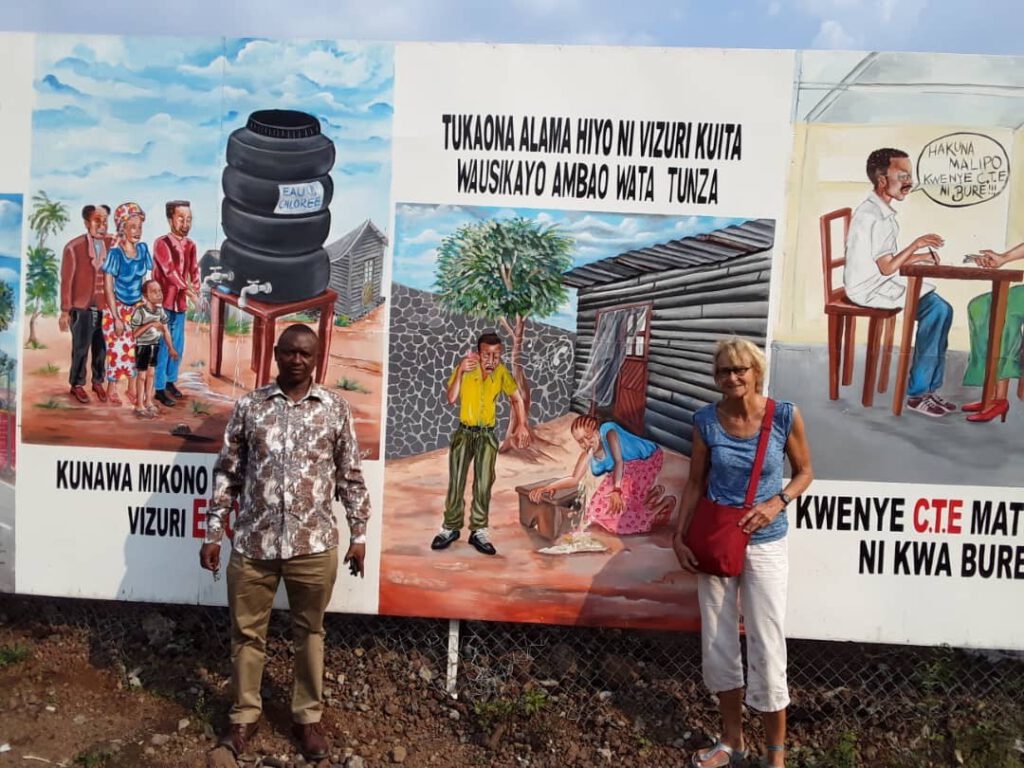
The Dutch FP Belia Klaassen has already many years a General practice. The clinic has a website and her newsletter in Dutch has a fascinating story and tells also about her werk in DRC (Congo).
Family Medicine Training now a State policy in Tanzania
Now public Masters FM-training is a fact following the success of the private FM-training in Aga Khan in Dar.
Read the most recent publication in the African J of FM. https://scielo.org.za/scielo.php?script=sci_arttext&pid=S2071-29362023000100076#corresp
Palliative care is a Family Medicine spearhead
Rubya Hospital is an advocate in training nurses in Palliative Care, doing home visits in the villages.
Fons Mathot’s has a brief story on the training and a compelling home visit.
PUM
Read more on the recent visit of Prof. Niek de Wit with PUM in Tanzania.
U
Uganda
In Makarere University a new Head of Department FM has started: Jane Frances Namatovu.
Jane made a “A brief of the developments in Family Medicine” with literature on FM in Uganda. She has been supported by the PM-fund to do a course for starting a PhD in MU (foto) with Prof GeertJan Dinant. Adam Lagro is her host during her stay. Jane has been teaching in Rwanda as part of an exchange (foto). We hope to collaborate on making FM-training in Uganda a success.
Lotte van Dijk, AIGT works since 2014 in Kampala (The Surgery, A FM-practice/ medical home/ emergency dep. with High Dependency Unit and admission facilities). If you want to contact her for her experiences, mail info@whig.nl and we will bring you in contact with Lotte.
Ukraine
Stichting Foundation Sharing Knowledge N-U (The Netherlands Ukraine)
The FSK N-U wants to share knowledge between Dutch Family Doctors and Ukrainian Doctors in basic healthcare. To achieve this, the Foundation translates NHG guidelines into Russian, organizes and gives training programs based on the NHG-guidelines in Ukraine. Tel. +31 345 618227 www.fsknu.com
United Arab Emirates, Dubai
In Dubai Caecilia Verlinden – Once a core member of the WHIG – works as a Family Practitioner. She has a professional page on Facebook
V
W
X
Y
Z
Zambia
Lisette Kramer werkt sinds november 2016 in Zambia. Eerst ruraal in het zuiden van Zambia en sinds 4 jaar in een lokaal ‘first level hospital’ in een achterstandswijk. lisettekramer@hotmail.com
Jelle Struik (FP) recently worked as a locum in a rural hospital in Zambia He experienced that as a FP he was valuable even though he was not trained as tropical doctor in surgery.
Read his site: http://jelleendiane.reismee.nl/
For contact with Jelle mail: info@whig.nl for his email.
 Dutch
 English

